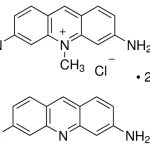
Acriflavine hydrochloride (CAS 8063-24-9)
Alternate Names: Euflavine; 3,6-Diamino-10-methylacridinium chloride hydrochloride
Application:Acriflavine hydrochloride is a combination of proflavin and acriflavin
CAS Number:8063-24-9
Molecular Weight: 541.90
Molecular Formula: C27H27Cl3N6
Application(s):
diagnostic assay manufacturing
hematology
histology
Acriflavine hydrochloride, identified by the CAS number 8063-24-9, is a valuable compound with diverse applications across scientific research, medical settings, and disinfection procedures. This article delves into its key properties, explores its various uses, and highlights safety considerations for handling acriflavine hydrochloride.
Properties:
Acriflavine hydrochloride appears as an orange-red to red crystalline powder. It possesses antiseptic properties and exhibits fluorescence, making it a valuable tool in research laboratories.
Applications:
Fluorescent Dye: Acriflavine hydrochloride’s fluorescent nature makes it a popular choice for staining DNA and RNA in biological samples. This allows researchers to visualize and study the structure and organization of nucleic acids within cells.
Antiseptic: Due to its antiseptic properties, acriflavine hydrochloride has historically been used as a topical disinfectant for wounds and burns. However, its use in medicine has diminished due to the availability of more effective and safer alternatives.
Safety:
It’s crucial to handle acriflavine hydrochloride with care. The compound can cause irritation to the skin, eyes, and respiratory system. Always wear appropriate personal protective equipment, such as gloves, safety glasses, and a lab coat, when working with this material.
Conclusion:
Acriflavine hydrochloride remains a significant compound in specific research applications due to its fluorescent properties for staining nucleic acids. However, its use as a topical antiseptic is limited due to the availability of safer alternatives. Always prioritize safety measures when handling acriflavine hydrochloride.